6 IFR Topics your CFII Expects You to Know

By checkride time, you've been through most of the IFR material at least once, weather, approaches, holds, clearances, systems, emergencies.
The challenge isn't seeing a topic for the first time. It's the moment you recognize the material, feel like you understand it, and then your CFII asks:
"Okay. Why?"
or
"What would you do if I gave you this scenario instead?"
That's where the gaps usually surface. Here are six areas worth testing yourself on before someone else does.
1. Alternate Planning Beyond the Acronym
Most Instrument students know the 1-2-3 rule.
Now put the rule inside an actual flight:
-
Is an alternate legally required for the destination you filed to?
-
Does the airport you picked qualify as an alternate under current forecasts?
-
What alternate minimums apply to the approach you'd use there?
-
What does that do to your fuel burn and reserves?
Knowing the rule is step one. Applying it under a specific set of forecasts is where alternate planning starts to matter.
2. Lost Communications
You probably know AVEF and MEA.
Now hide the acronyms.
You lose comms in IMC. What route do you fly? What altitude? What if you break out into VMC? What happens at the clearance limit? When do you start the approach?
That's where the memorized answer usually runs out.
Quick self-test: could you explain that whole scenario out loud without looking anything up? If not, you just found something useful to review.
3. Holding
Holding:
Direct. Parallel. Teardrop.
Easy on a whiteboard. Less easy when the questions get specific:
Where is the fix?
Which direction are you holding? What course or radial defines it? How long are the legs?
What about wind correction?
What did ATC actually clear you to do?
Entry procedures are the piece students study most. The rest of the hold is where the oral usually goes.
5. IFR Weather
Reading a METAR or TAF is the easy part. Making a decision from the information is where the oral goes:
-
What is the weather doing along your route, not just at your destination?
-
Where are the freezing levels relative to your MEA?
-
What are PIREPs telling you that the METARs aren't?
-
Does convection matter for this flight or not?
-
What would make you delay, divert, or cancel?
None of those are decoding questions. They're decision questions with regulatory and safety implications, and they're what the DPE is actually testing.
Be Honest for a Second
Did those six sections feel like:
"Yeah, I know all of that."
Or:
"I could close this page and explain all of it right now, out loud, without notes."
Those aren't always the same thing.
That's the problem with passive studying. The answer looks familiar. The video makes sense when you're watching it. The multiple-choice question gives you a clue. Then your CFII asks "Why?" and the answer gets harder.
Finding What You Don't Know
You could reread the AIM. Rewatch the ground school lessons you've already seen. Scroll through your notes. Or you could hide the answer, say it out loud, and see what breaks.
That's the idea behind our Instrument Pilot Flashcards.
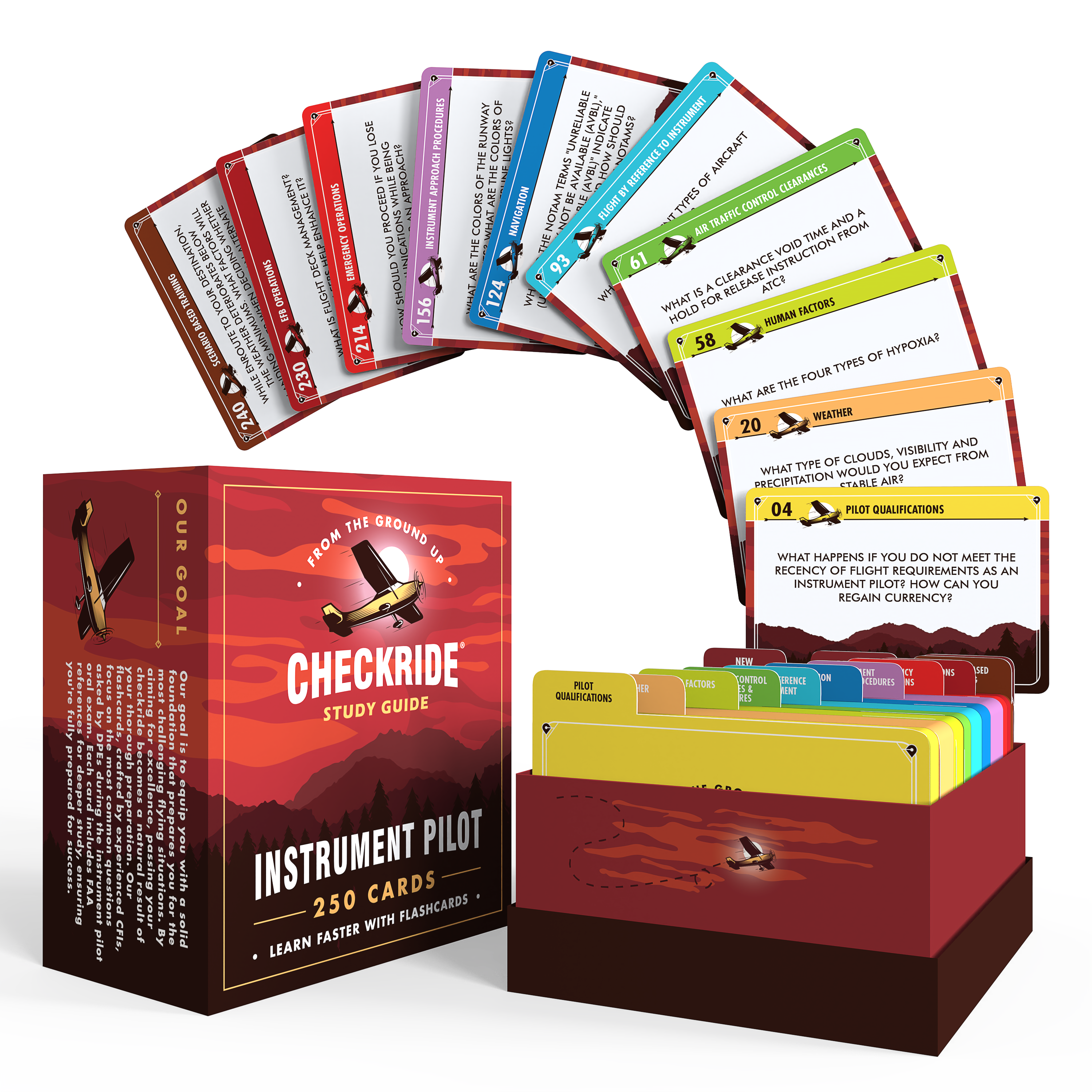
250 physical cards, written and reviewed by CFIIs, covering the 10 ACS knowledge areas the DPE is required to test. Each card asks a direct or scenario-based question. Each answer cites the FAA reference where the material lives.
The point isn't the card count. It's the sort system that goes with them.
New → Review → Checkride Ready
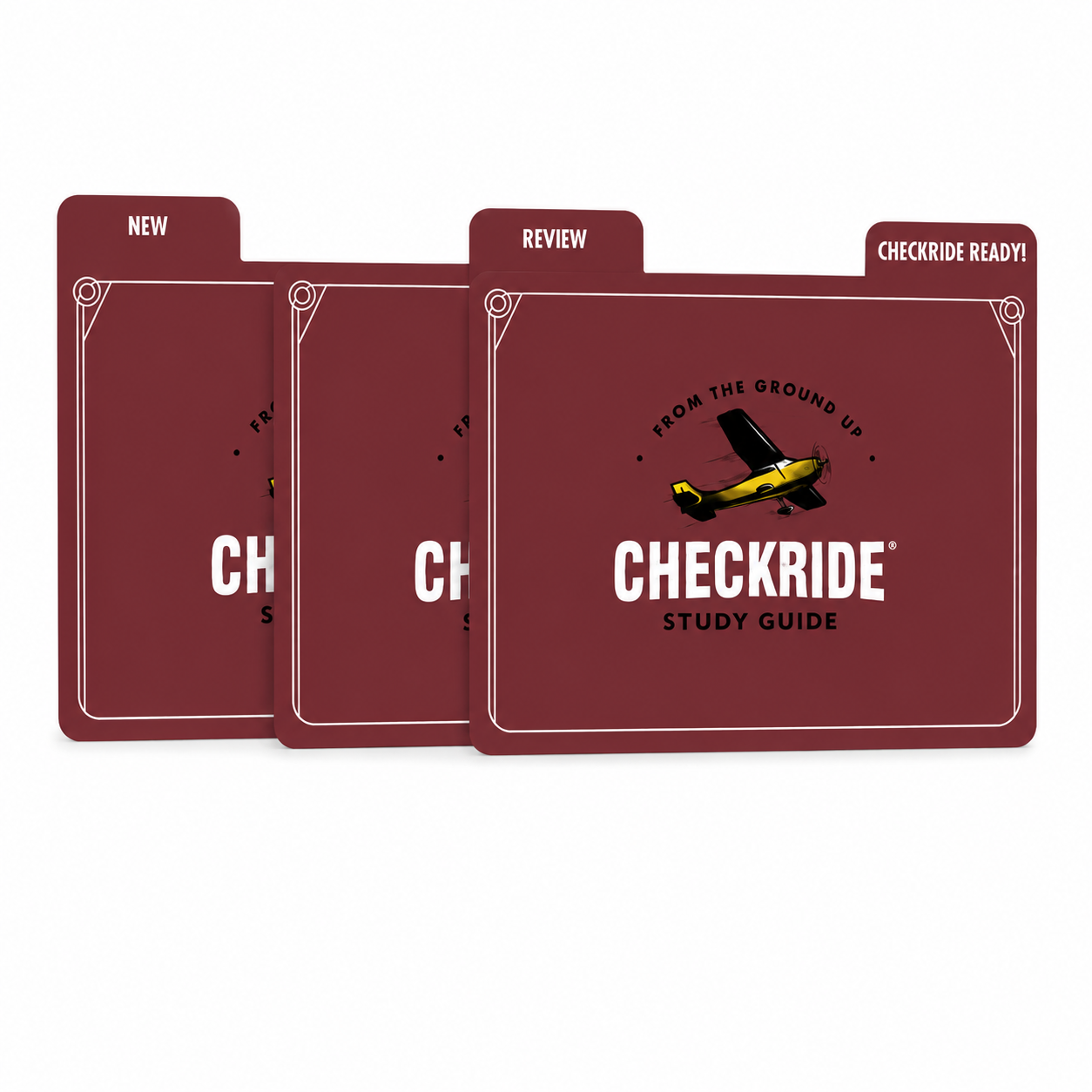
Test yourself before flipping the card over. Cards you don't know stay in New. Cards that need more work move to Review. Cards you can explain confidently move to Checkride Ready. Your study sessions stay focused on what you actually need to improve, not what you already have.
You walk into the oral knowing exactly which sections are solid and which aren't.
Already Have a Ground School?
Good. Keep using it. Your ground school helps teach the material. Your CFII helps you understand and apply it. The cards do something different: they make you produce the answer before you see it.
If you miss something, go back to your course, the FAA source, your aircraft documents, or your instructor. Understand it. Then test yourself again.
Why Not Just Make Your Own?
You can. Plenty of Instrument students use Quizlet, Anki, or paper cards they wrote themselves.
2 tradeoffs are worth naming. First, building 250 verified cards takes a weekend, often 2, before you've studied 1 card.
Second, verification. Crowd-sourced Quizlet decks for IFR are frequently outdated, old regulations, wrong minimums, missing FAA references.
At $64.99, the deck costs less than one hour with your CFII. The alternative is spending a weekend building what someone else has already built and verified.
What people are saying about us...
J. Upton, Verified Customer
Makes studying so much easier… especially while traveling. An absolute MUST for any IFR student.
Misael, Verified Customer
The flashcards are incredibly well-organized and concise, making it easy to drill the key concepts and procedures.
Jeff V, Verified Customer
The color-coding made it easy to break topics down… and the references to FAR/AIM were super helpful.
Dylan Meade, Amazon Customer
These cards break everything down in a way that’s structured, clear, and practical, not just memorization. The explanations go beyond one-line answers, they actually help you understand the ‘why’.
What's In the Box?
-
250 physical Instrument Pilot flashcards written and reviewed by CFIIs
-
10 color-coded ACS knowledge areas
-
Direct and scenario-based questions
-
FAA references and ACS task codes on every card
-
New / Review / Checkride Ready progress dividers
-
Premium rigid storage box
-
Free CFI email support while you study
One Last Test
Pick one of the six topics above. Now close this page.
Explain it out loud, not the acronym, not the definition. The situation. If you can, great. If you can't, even better.
You just found something worth studying before your CFII or your DPE has to find it for you.