



Private Pilot Flashcards
Private Pilot Flashcards
Couldn't load pickup availability
Costs less than 1 flight lesson. Trusted by 20,000+ pilots.
-
Ordered
- - -
Order Ready
- - -
Delivered

Private Pilot Flashcards

Instrument Pilot Flashcards
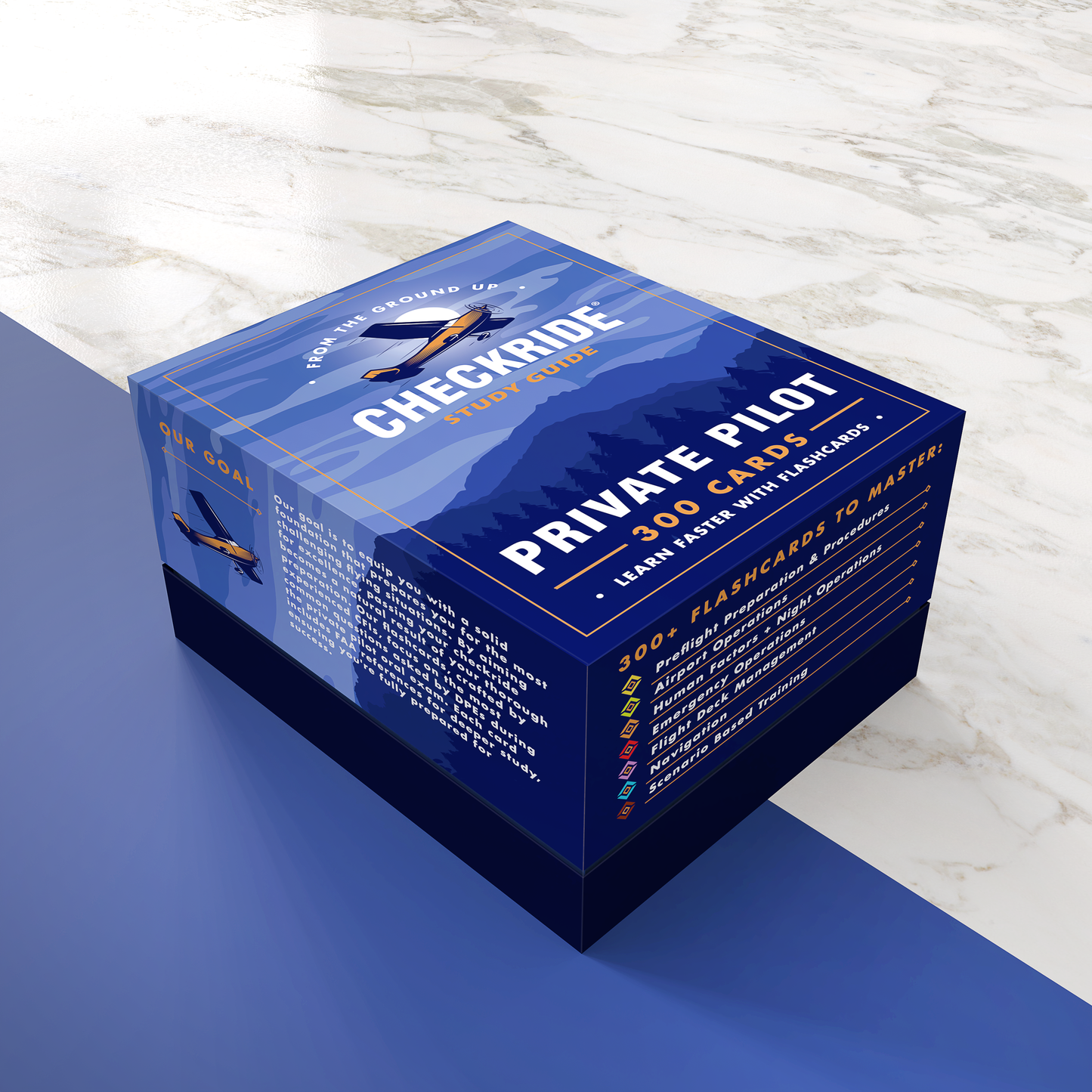
A 308-card physical study system designed to help student pilots and certificated pilots organize Private Pilot knowledge, practice active recall, and identify weak areas throughout training.
One Deck for Every Stage of Private Pilot Training
- Build foundational knowledge for the Private Pilot written test
- Practice answering oral-exam questions without notes or multiple-choice prompts
- Study relevant topics before flight and ground lessons
- Prepare for instructor follow-up questions and mock orals
- Review regulations, weather, navigation, systems, emergencies, and decision-making
- Refresh knowledge before a flight review
- Keep foundational VFR knowledge current after earning your certificate
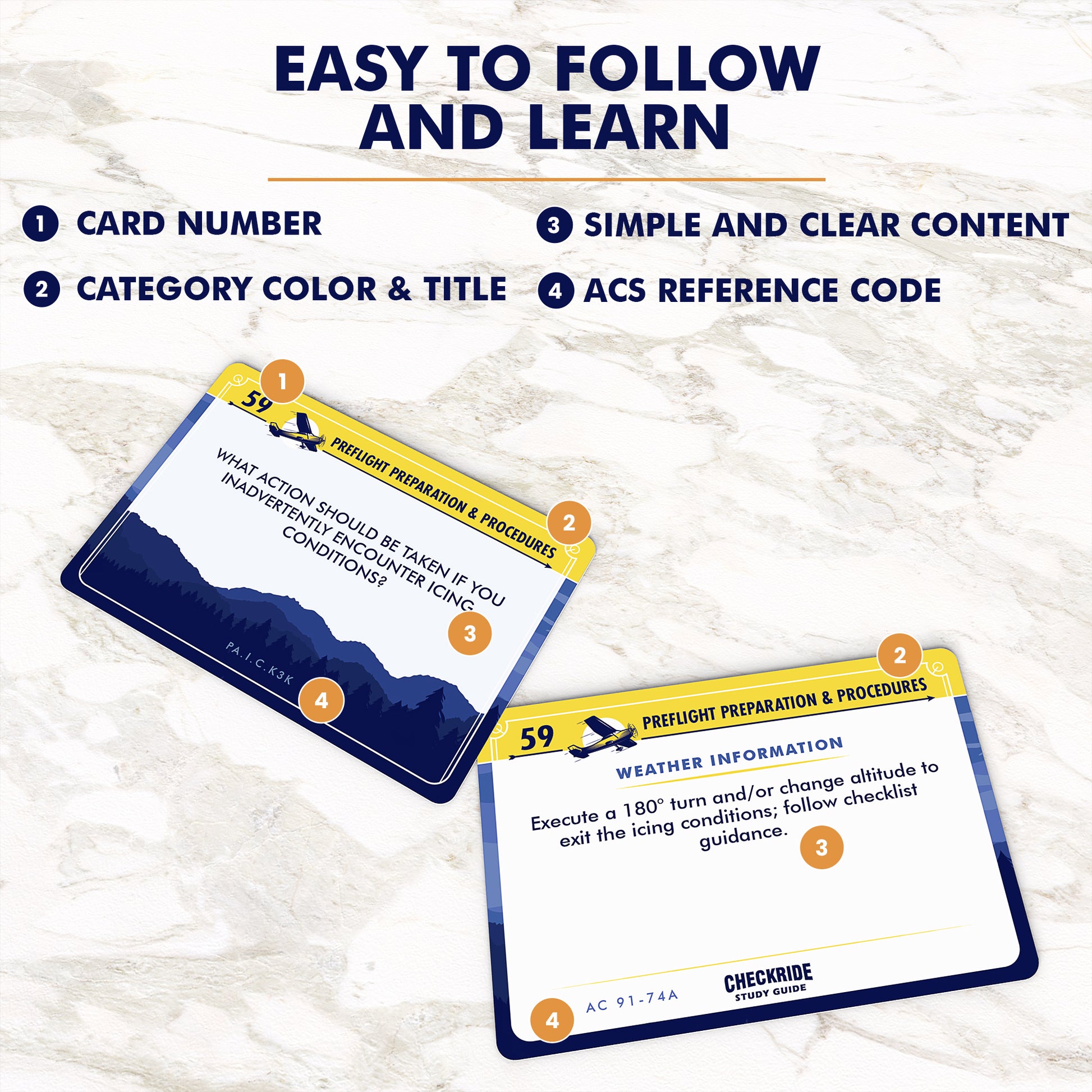
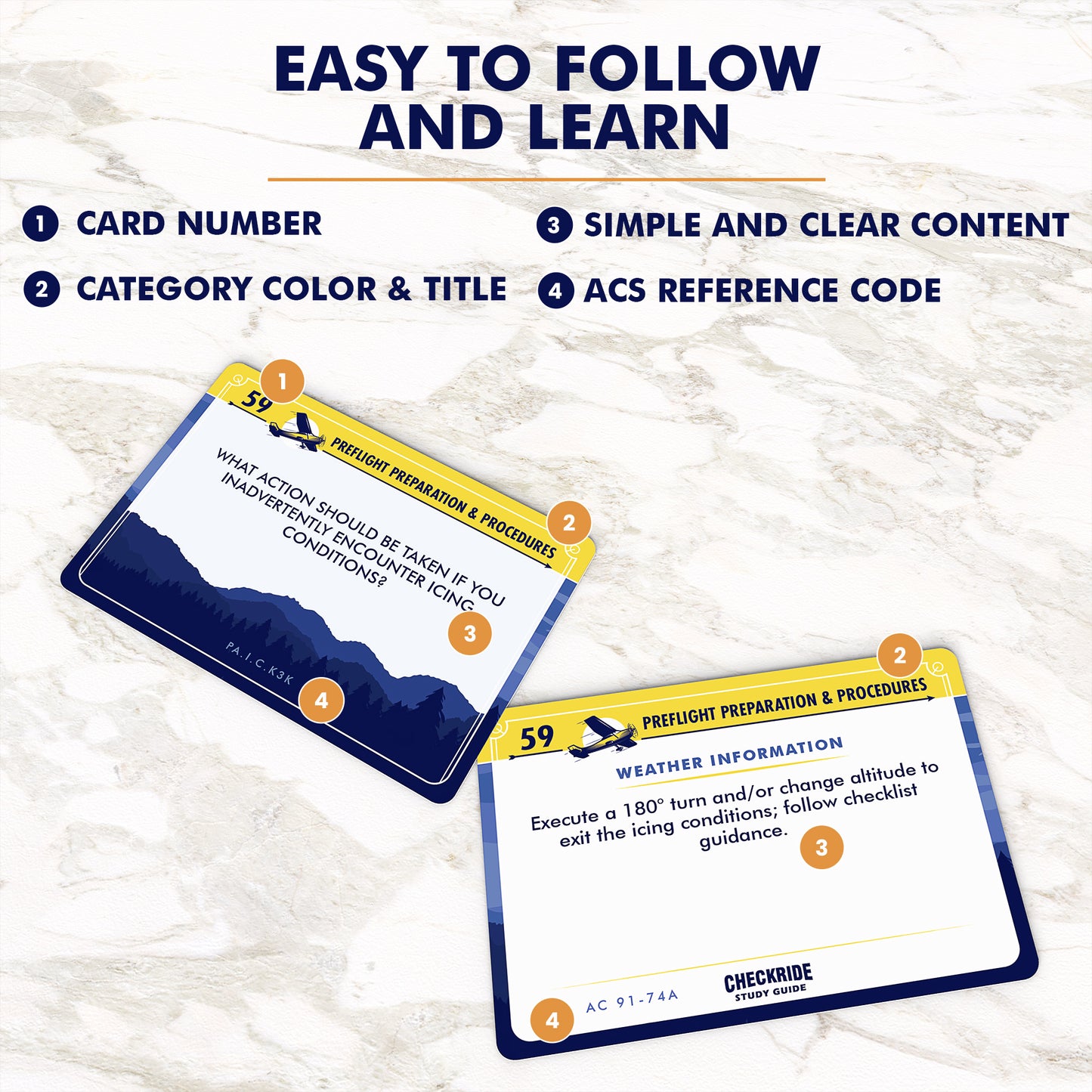
The FAA Private Pilot ACS establishes the aeronautical knowledge, risk-management, and flight-proficiency standards used for certification. These cards organize that knowledge into focused questions, concise answers, applicable ACS task codes, and FAA references for further study.
What’s Included
- 308 physical Private Pilot flashcards
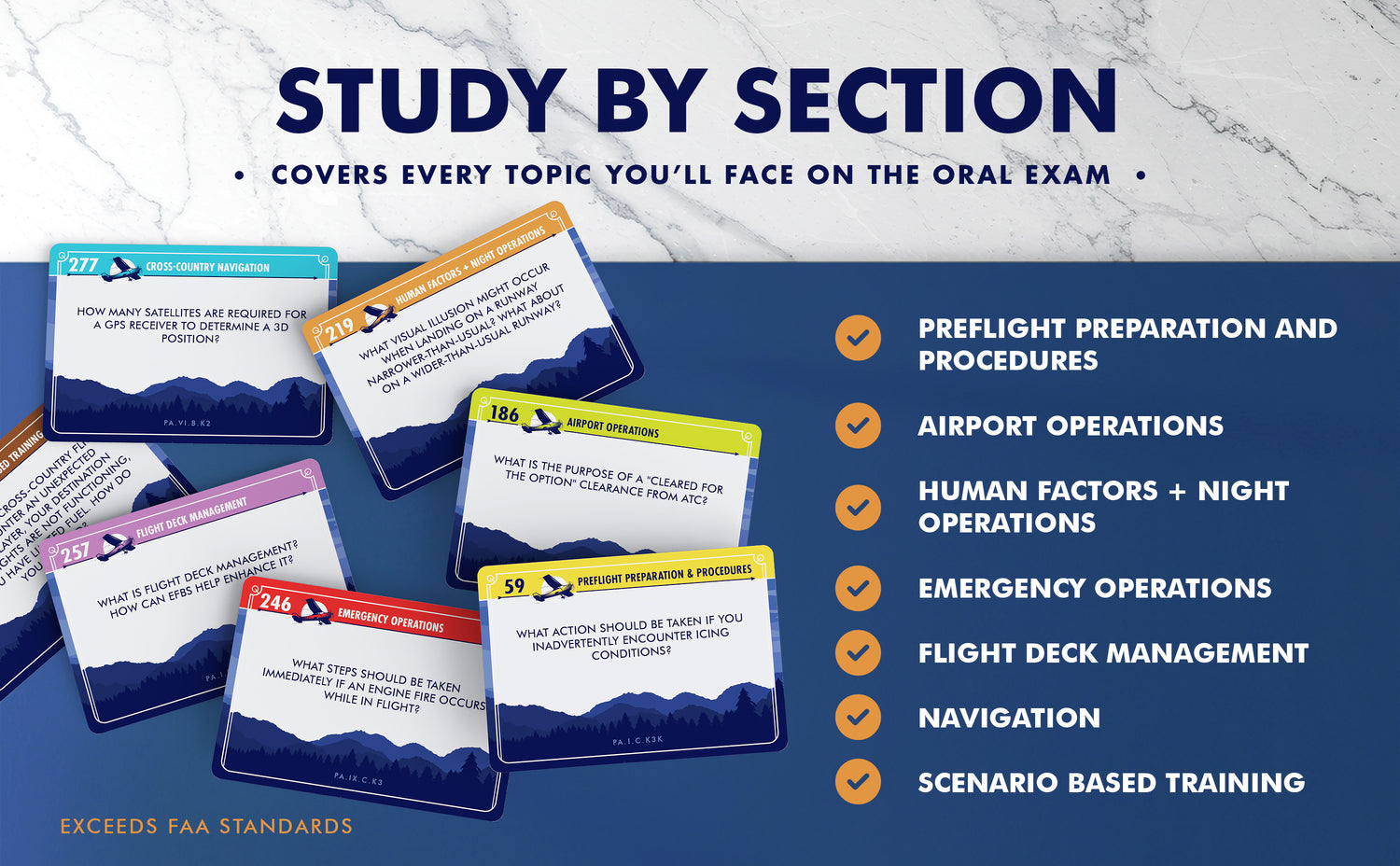
- Seven color-coded study sections
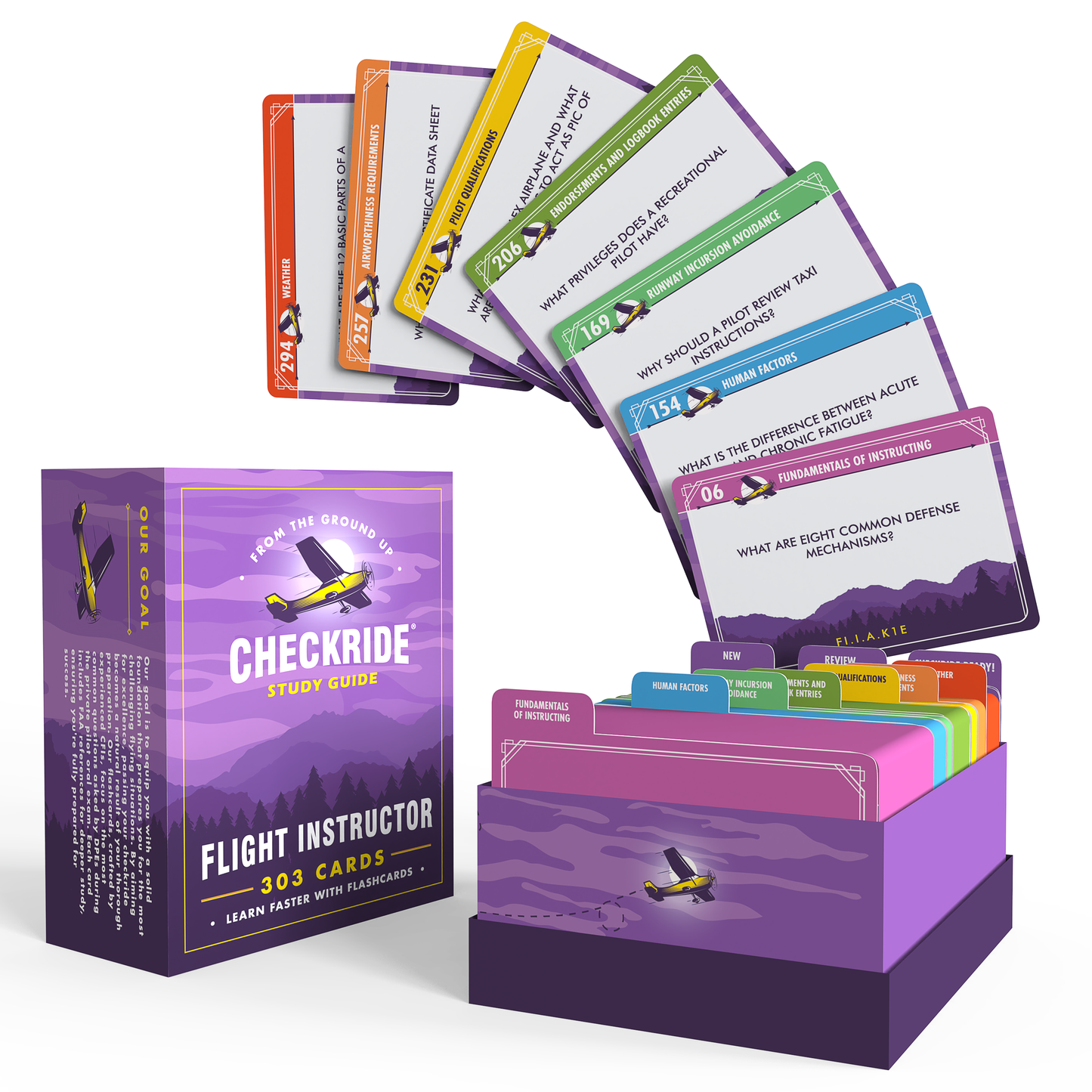
- Subject dividers
- New, Review, and Checkride Ready progress dividers
- Direct-recall and scenario-based questions
- Applicable Private Pilot ACS task codes
- FAA references for further study
- One focused concept per card
- Premium rigid storage box
- Email support from an experienced flight instructor
- Satisfaction guarantee
- No app, login, charger, or subscription required
Study by Section:
- Preflight Preparation & Procedures
- Airport Operations
- Human Factors + Night Operations
- Emergency Operations
- Flight Deck Management
- Cross Country Navigation
- Scenario-Based Training
During early flight training:
- Study one color-coded section after every lesson that introduces a new topic
- Use Weather cards after your first weather briefing lesson
- Use Airspace cards after your first cross-country planning lesson
- Build knowledge progressively rather than reviewing everything at once
Track Your Progress
Use the included New, Review, and Checkride Ready dividers to organize the deck based on your actual understanding:
- Place unfamiliar cards in New
- Move developing topics into Review
- Move cards you can explain accurately and completely into Checkride Ready
Instead of guessing whether you are prepared, you can see exactly what you know and which subjects still require more work.
Arrive at Ground Lessons Better Prepared
Study selected sections before meeting with your instructor, then bring the cards to your ground lesson for follow-up questions or mock-oral practice.
Arriving prepared can help you:
- Use paid ground time more efficiently
- Ask more focused questions
- Spend less time reviewing material you can study independently
- Help your instructor identify gaps in your understanding
- Focus lessons on subjects requiring deeper explanation
- Spend more time applying knowledge to realistic flying scenarios
The deck is designed to supplement current FAA publications, aircraft-specific materials, written-test preparation, and instruction from an authorized flight instructor. It does not replace instruction from an authorized instructor.
Shipping Details
Shipping Details
Orders ship via UPS/USPS. Rates are calculated at checkout by destination and weight. Please allow 1–2 business days for processing and up to 7 business days for delivery.



Written at the instructional level
Every card was written by CFIs who have prepared applicants for the private pilot practical test. The questions reflect how a DPE asks them, at the depth and instructional application the ACS requires. The answers are complete, accurately sourced, and framed the way a well-prepared applicant would respond.


One Deck for Every Stage of Private Pilot Training

Study Strategy
Start every card in the New section. When you can answer it without flipping the card, move it to Review. Once you can explain the complete answer accurately, confidently, and without prompting, move it to Checkride Ready.

Be Ready for the Follow-Up Questions
The Private Pilot oral rarely ends with a single factual answer. Your examiner may ask you to explain why the answer applies, connect it to your aircraft, or make a decision based on changing conditions.
A discussion may move from:
- What equipment is required?
- Is the aircraft legally airworthy?
- Can you legally depart?
- Should you depart under these conditions?
- What changes if the weather deteriorates?
- How would you explain the risk to your passengers?
Use the cards to practice more than stating the correct response. Explain why it matters, how it applies to the flight, and what could change your decision.
Answer Before Turning the Card Over
- Read the complete question
- Give your answer aloud
- Explain why it is correct
- Apply it to your aircraft or planned flight
- Identify anything you are unsure about
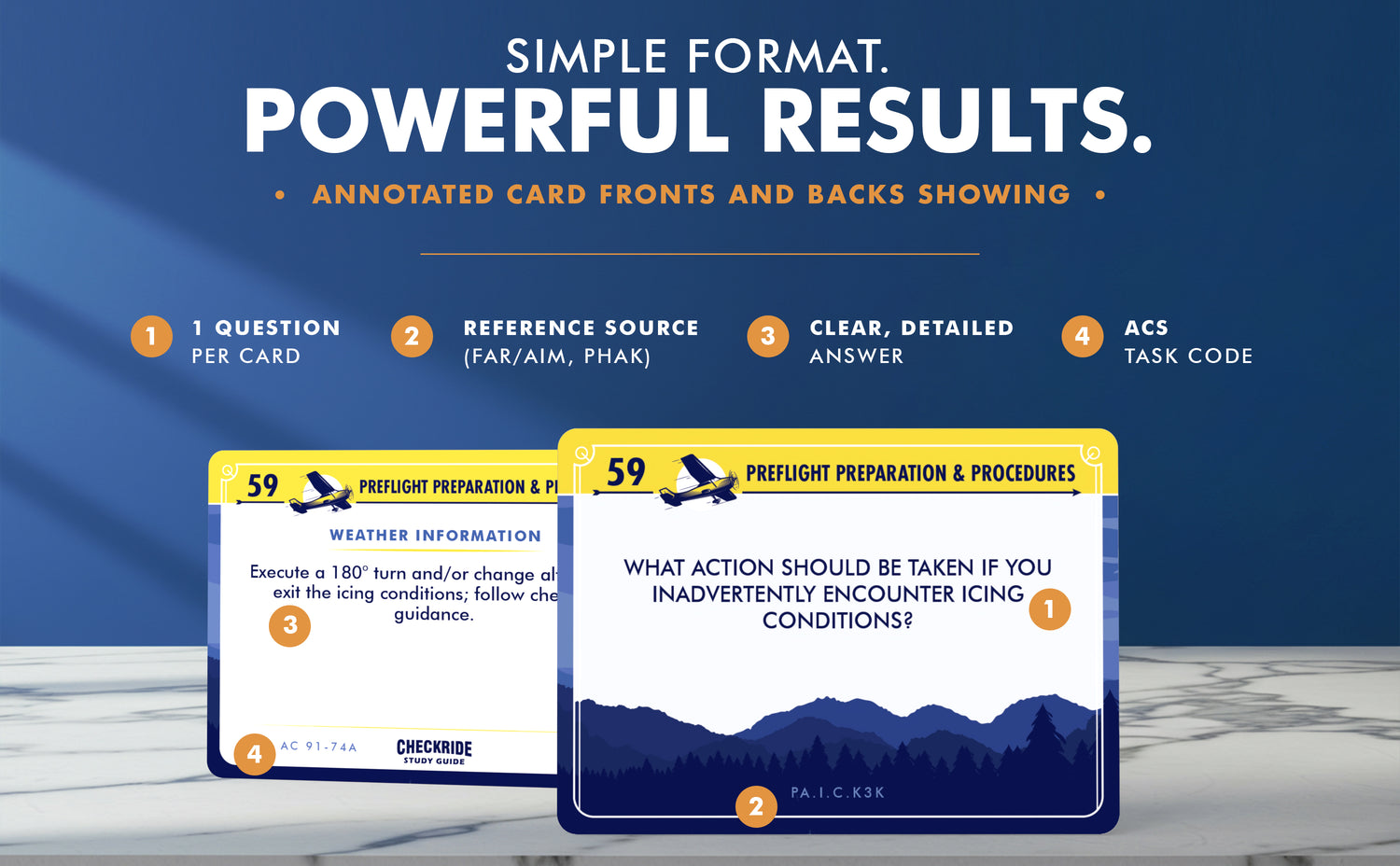
After Revealing the Answer
- Compare it with your response
- Identify missing details
- Review the FAA reference
- Sort the card by understanding
- Repeat difficult topics more often

Find Your Knowledge Gaps Before Your CFI Does
Run through the deck before meeting with your CFI to identify weak areas on your own. Move familiar topics into Review, keep missed questions in New, and arrive knowing exactly what requires additional explanation or practice.
Learn Faster With Flashcards
300+ ACS-mapped flashcards that turn study hours into checkride confidence.
Why Pilots Learn Faster with This Deck
FAQ
How many flashcards are included?
How many flashcards are included?
A boxed set of 308 Private Pilot VFR oral exam flashcards organized into color-coded ACS task code sections for fast navigation. Each card includes FAA references for deeper study.
Are these for the written test, the oral exam, or a flight review?
Are these for the written test, the oral exam, or a flight review?
All three, at different stages. The cards are built primarily for the oral exam, practicing active recall of ACS knowledge areas. They also reinforce the understanding behind written test topics, making written knowledge more durable and carrying it forward into the oral where options disappear. For certificated pilots, they work as a structured review tool before biennial flight reviews. They are not a complete written test question bank and should not replace an approved ground school or test prep program for the FAA knowledge test.
Will this help beyond PPL (e.g., IFR/Commercial)?
Will this help beyond PPL (e.g., IFR/Commercial)?
Yes. The same deck works for biennial flight review preparation, recurrent knowledge maintenance, and keeping foundational knowledge current as you begin instrument training. Private pilot knowledge fades without structured review. The deck does not expire with your training, it becomes a long-term reference that can be resorted whenever it is needed.
When should I start using these?
When should I start using these?
Earlier than you think. Most student pilots start in the final few weeks before their checkride and wish they had started sooner. The most effective approach is beginning during ground school, working through the section that matches each lesson topic as training progresses. By the time checkride preparation begins, most of the deck has already been covered in context and the Checkride Ready stack is already substantial.
How are these different from practice test apps?
How are these different from practice test apps?
Apps build recognition, you identify the correct answer from a list. These cards build recall, you produce the answer without any options in front of you. The oral exam tests recall. The flight review tests recall. The cockpit requires recall. Practice test apps and these cards are complementary, use both. Apps prepare you for the written test format; these cards prepare you for the oral and for retaining knowledge long-term.
What if I already know most of the material?
What if I already know most of the material?
Run through the deck and find out. Sort every card honestly. The Review stack will show you exactly where your recall is softer than your recognition. Most pilots who think they know the material discover two or three sections where specific details are not yet at automatic recall. Finding that before the DPE does is exactly what this system is designed to produce.
Does the deck contain the exact questions my DPE will ask?
Does the deck contain the exact questions my DPE will ask?
Examiners may phrase questions differently, use different scenarios, and ask different follow-up questions. The deck builds underlying knowledge rather than providing a guaranteed script.


Complete Pilot Career Library (Bundle & Save)
Complete Pilot Career Library (Bundle & Save)


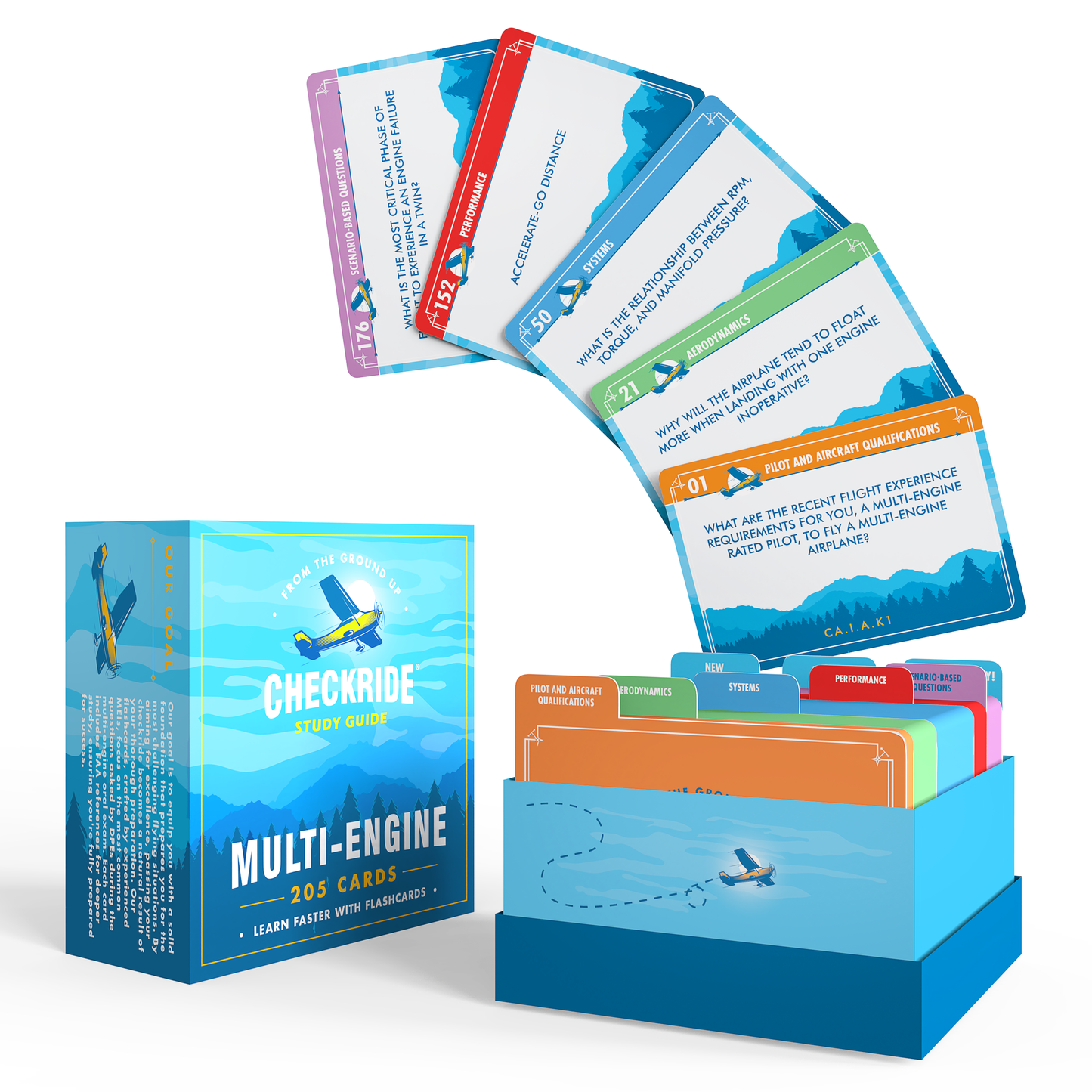
Build the Knowledge for the Written. Practice Explaining It for the Oral.
Use physical flashcards to study before lessons, identify weak areas, prepare for mock orals, review before a flight review, and keep foundational knowledge available after certification.